2009 Conservation Finalists
We invite you to learn about this year's 6 conservation project finalists. Voting takes place October 1 through October 31.
Recipient #1 - Snow Leopards - Snow Leopard Trust
Recipient #2 - Thornicroft's giraffe -
South Luangwa Conservation Society
Recipient #3 - Javan and Sumatran Rhinos - International Rhino Foundation
Finalist #4 - Education Center - La MICA Biological Station
Finalist #5 - Golden Lion Tamarins - Associação Mico Leão Dourado
Finalist #6 - Oregon Spotted Frog - Woodland Park Zoo
Recipient #1

Snow Leopard Conservation in Mongolia
Snow
Leopard Trust
Species Focus: snow leopard
Country, Continent:
Mongolia, Asia
$15,000.00 requested
The snow leopard is a
majestic big cat that has been called “the spirit of the Himalayas.”
Snow leopards are uniquely adapted to life in the mountains of Asia:
roughly seven times bigger than your average house cat, their large paws
act like snowshoes; dense fur up to five inches thick keeps them warm in
-30° F weather; and their long tail, one of the longest tails in the
cat family (nearly 3 feet) helps them balance along rocky cliffs. As a
top predator, snow leopards are an “umbrella species” and protecting
them is an effective way to conserve mountain habitat and hundreds of
other interdependent species. Poaching and other conflicts with herders
have reduced the world’s snow leopards to as few as 3,500 individuals,
making the snow leopard as endangered as the tiger and giant panda.
A
donation from the Zoo Boise Conservation Fund will help continue Snow
Leopard Enterprises, a small business and training program that offers
herders an alternative to poaching. The program’s twin goals are to 1)
protecting snow leopards, and 2) improve the standard of living for
people in snow leopard areas. Snow Leopard Enterprises helps
impoverished herders turn raw wool into beautiful products, like rugs
and clothing, and then sell them internationally. Through the program,
herders are able to increase their income. In turn, they pledge to
refrain from poaching snow leopards and their prey. This donation
will secure anti-poaching contracts with 400 herders in Mongolia, and to
help these herders sell over 13,000 crafts worldwide, including the Zoo
Boise gift shop, to raise awareness for snow leopard conservation. Recipient #2
Supporting
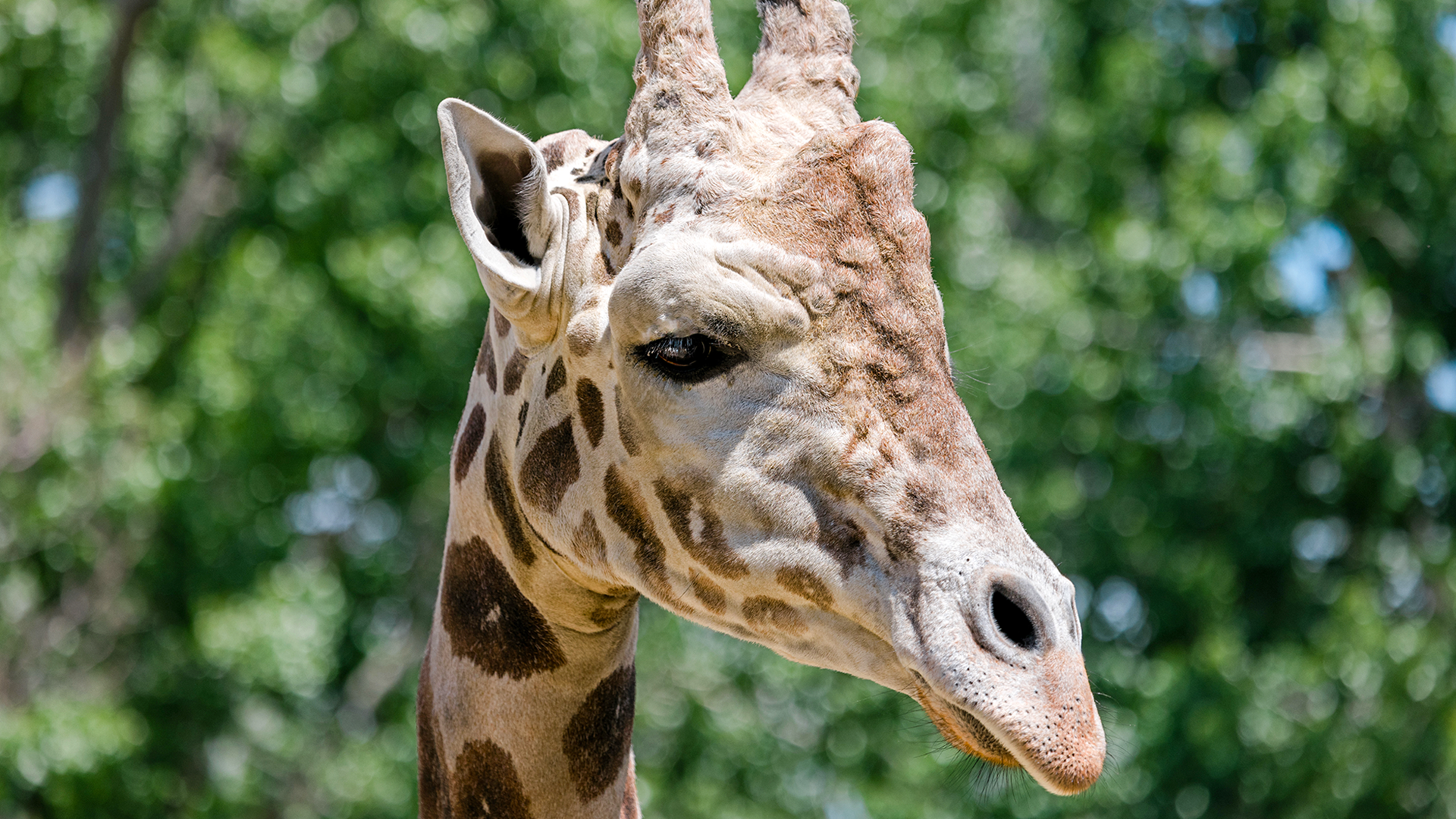
Anti-Snaring Activities to Protect the Thornicroft's Giraffe
South
Luangwa Conservation Society
Species Focus: Thornicroft's giraffe
Country,
Continent: Zambia, Africa
$24,024.50 requested
The project is
aimed at protecting the Thornicroft’s giraffe, found only in Zambia’s
South Luangwa National Park. The giraffe has long been recognized as one
of the most charismatic wildlife species and is becoming an
increasingly important large mammal, whose presence in its natural
environment generates income for local communities. The giraffe in the
local language is affectionately referred to as "Nyamalikiti," which
directly translates in to "the animal which limps," due to the way they
walk. The South Laungwa National Park is a 9050 square kilometer
unfenced protected wilderness with over 100 species of mammals, 470 bird
species, and is regarded as Zambia’s flagship national park.
Historically,
local Zambians in the Luangwa Valley have not hunted giraffe due to a
traditional belief that they will become infected with ‘spots’ after
eating the meat. This has meant that the giraffe population has been
able to increase at a healthy rate since the 20th century. However,
during the past ten years, tourism in South Luangwa and Zambia in
general has increased dramatically resulting in an increase in the human
population just outside the national park. Consequently an increase in
human animal conflict has occurred, an increase in demand for bush meat
and therefore an increase in poaching using guns and wire snares to trap
animals. Giraffe, like many other animals, are not targeted by poachers
but tend to get caught in snares regularly and subsequently die unless
we are able to help them.
A donation from the Zoo Boise
Conservation Fund will help the SLCS and their Anti-snaring Awareness
Campaign with the following goals: To raise awareness about snaring
amongst the local community and change the public’s attitude from
supporting or neutral to opposing snaring, to remove some of the wire
used for snaring from the community and to reduce snaring and finally,
to provide an interactive and friendly forum for the community, SLCS,
the Zambia Wildlife Authority and the Community Resource Boards to
interact.
Recipient #3
Protecting Critically Endangered Sumatran
and Javan Rhinos From ExtinctionInternational Rhino
Foundation
Species Focus: Javan and Sumatran Rhino
Country,
Continent: Indonesia, Asia
$25,000.00 requested
The
critically endangered Javan and Sumatran rhinoceroses are 2 of the
rarest and most threatened mammal species in the world. Fewer than 225
Sumatran rhinos and 50 Javan rhinos exist in the wild. Both species
could easily become extinct within our lifetimes if we do not take
proactive measures to protect them. The viable Javan rhino population is
essentially confined to one national park in Indonesia, while the
viable Sumatran rhino population is spread across 3 major parks. These
national parks contain some of the most critical remaining tropical
forest habitats in Indonesia – they are each home to numerous threatened
species and provide critical ecosystem services for local populations.
Each of these parks is also under extreme threat – up to 30% of their
area has already been lost to illegal encroachment and conversion of
land for agriculture. And the unique species living within these parks,
including Javan and Sumatran rhinos, are declining due to poaching and
habitat loss.
The International Rhino Foundation funds and
operates Rhino Protection Units (RPUs) in these parks, to prevent
poaching and encroachment, and to monitor and protect threatened species
and the overall habitat. RPUs are highly trained four-person
anti-poaching teams (made up of local community members) that
intensively patrol key areas within national parks, deactivating traps
and snares; identifying and apprehending illegal intruders, including
poachers; and investigating crime scenes, thus preventing or reducing
the loss of wildlife. The RPU program has essentially helped put a halt
to rhino poaching in these three parks. The successes of these units
have kept Javan and Sumatran rhinos from extinction and remain critical
for their continued survival.
A donation from the Zoo
Boise Conservation Fund would benefit the RPU (Rhino Protection Unit)
program, whose efforts are long-term, and with increasing human
populations and decreasing resources, will likely need to be expanded.
This amount would partially support the RPU program from January 1, 2010
- December 31, 2010. If anti-poaching and other direct protection and
prevention efforts of rare and endangered species with a high economic
value cannot be sustained for as long as necessary, it will only give a
temporary respite and will not prevent the target species becoming
extinct. For the foreseeable future, intensive protection by RPUs will
need to be continued while the threats from poaching, habitat
degradation and habitat loss are resolved by means of public education,
economic development and other long-term civil processes.
Finalist #4
Education Center
La MICA Biological Center
Species
Focus: Bats, monkeys, sloth, tapir, 5 felines, 360 species of birds, 60+
species of amphibians, 75+ species of reptiles
Country, Continent:
Republic of Panama, Central America
$19,415.00 requested
Education
is an essential key to conservation. In an effort to enhance the
conservation efforts for the remarkable cloud forests of central Panama,
this project aims to construct an environmentally-friendly Education
Center in conjunction with La MICA Biological Station, located in El
Copé, Coclé, Republic of Panama. The region is home to many amazing
animals and plants, such as jaguars, Baird’s tapirs, 360 species of
birds including trogons, hummingbirds, and parrots, endangered frogs,
rare orchids, to name only a few.
The Education Center will
provide facilities for students and researchers from around the world,
but also a place for learning for the local school children. The
advancement of our scientific knowledge about the area and the local
flora and fauna will help to develop conservation and management plans.
Educational opportunities for the local people will help to shift
viewpoints towards of consideration and consciousness of conservation.
Furthermore, the employment of local people for this project will
provide sustainable work that is conservation-oriented. The proposed
Education Center of La MICA Biological Station promises to make
immediate positive changes towards conservation of the cloud forests of
central Panama.
A donation from the Zoo Boise Conservation
Fund will pay for the building and construction costs and pay the
employees to erect the Education Center. The proposed opening date for
this center is Spring 2010.
Finalist #5
Connecting Forest Islands to Conserve Golden
Lion Tamarins in Brazil
Associação Mico Leão Dourado
Species
Focus: golden lion tamarins
Country, Continent: Brazil, South
America
$25,000.00 requested
Golden lion tamarins (GLTs)
are squirrel-sized, red-gold monkeys native to remaining fragments of
Brazil's Atlantic Forest in Rio de Janeiro state. This region of Brazil
was the first to be colonized and has since developed into the
agricultural, industrial and population center of the country. With less
than 2% remaining in lowland forest, this is one of the world's most
endangered biodiversity hotspots. Unless we do something to stop it,
GLTs will go extinct in the near future. The good news is that we can
prevent the extinction of this primate. With two decades of work by a
dedicated and effective Brazilian conservation organization, the
Associação Mico Leão Dourado (AMLD), the number of GLTs has increased
from a few hundred in the 1960s to approximately 1,500 now. In fact, the
conservation status of GLTs was upgraded from "critically endangered"
to "endangered" in 2003. However, much still needs to be done to protect
the GLTs from extinction.
Unfortunately, the remaining
forest patches are too small and isolated to hold a viable population of
GLTs. AMLD has a clear and achievable plan to ensure that GLTs will
continue to survive in nature for decades to come. In partnership with
local communities, AMLD is planting forest corridors connecting these
isolated forest fragments, monitoring GLTs and their habitat, and moving
GLTs to and from smaller forest patches to increase genetic diversity.
A
donation from the Zoo Boise Conservation fund will help achieve the
goal of ensuring a viable population (estimated at 2,000 GLTs) living in
at least 25,000 hectares of forest that are connected and protected.
Funding will be used to support AMLD in their efforts to save GLTs by
paying salaries of two wildlife managers from the local community,
professionals who monitor and move GLTs among forest fragments.
Finalist #6
Oregon Spotted Frog Project
Woodland Park Zoo
Species Focus: Oregon spotted frog
Country, Continent: USA, North America
$15,000.00 requested
Frogs and other amphibians are a very old group of animals… they were around even before the dinosaurs! But today more than half of all amphibian species are facing extinction. Habitat loss, pollution, climate change, and a deadly disease called chytridiomycosis are causing this decline. Scientists believe that at least 122 species have already gone extinct since 1980.
Despite its name, the Oregon spotted frog isn’t just found in Oregon. In fact, they were once common throughout the Pacific Northwest. Scientists consider them endangered in Washington; they may soon qualify for listing under the Federal Endangered Species Act. The Washington Department of Fish and Wildlife considers spotted frogs a high priority for conservation and has enlisted Woodland Park Zoo to help.
This project consists of three parts: 1) raising frogs in captivity and reintroducing them into the wild once they reach a target weight of 15-20 grams, 2) monitoring frog populations in the wild and 3) complete Washington State’s Oregon Spotted Frog Recovery Plan. Woodland Park Zoo is helping boost wild populations of a local species, the endangered Oregon spotted frog.
A donation from the Zoo Boise Conservation Fund would help save this species from extinction by assisting Woodland Park Zoo raise as many as 2,000 frogs for release into the wild, as well as develop methods that could help save other frog species around the world. We hope Zoo Boise "leaps" to help these frogs!